
High quality natural jadeite jade Within Your Budget
High quality natural jadeite jade Within Your Budget
High quality natural jadeite jade is increasingly seen as hard assets. From luxury jadeite jewelry to investment grade jadeite, more collectors are adding jadeite to their long-term portfolios.
But not all jadeite plays the same role in investment—and not every collector needs a top-tier budget. To build a smart collection, you need to understand how the market is structured, then choose the best pieces within your own budget and personal taste.
The Jadeite Investment Pyramid
A simple way to understand the market is through four levels:
-
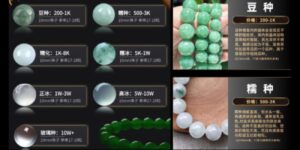
Entry Level (Consumer Grade, $100~$10,000)
These pieces are widely available, often with darker tones, visible inclusions, and lower transparency. They are suitable for daily wear but have limited investment value. This level also carries higher risk of treated or imitation jadeite.
2. Commercial Level (Accessible Investment, $10,000–$20,000)
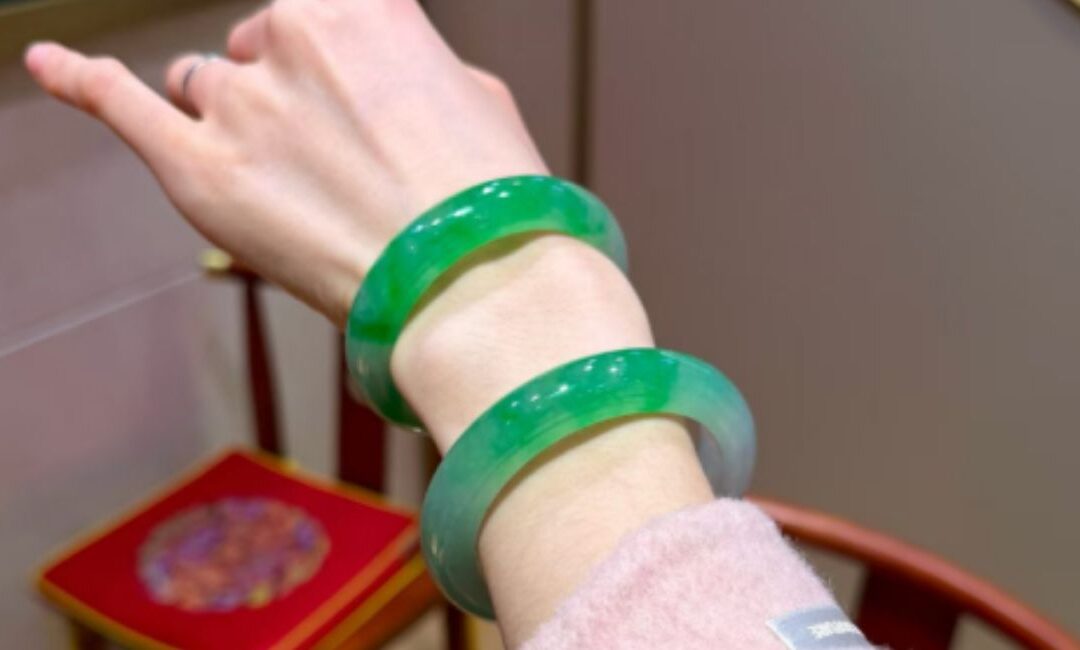
This category includes better-quality jadeite with brighter color and improved transparency. Common items include pendants, cabochon rings, and bangles with certified jadeite jewelry reports (NGTC, GIA). These pieces are more liquid and may show steady, moderate value growth. For many, this is the ideal starting point.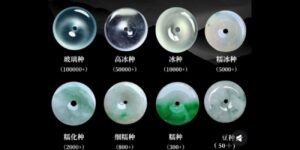
3. Collector Level (High-Quality Jade, ~$20,000–$200,000)
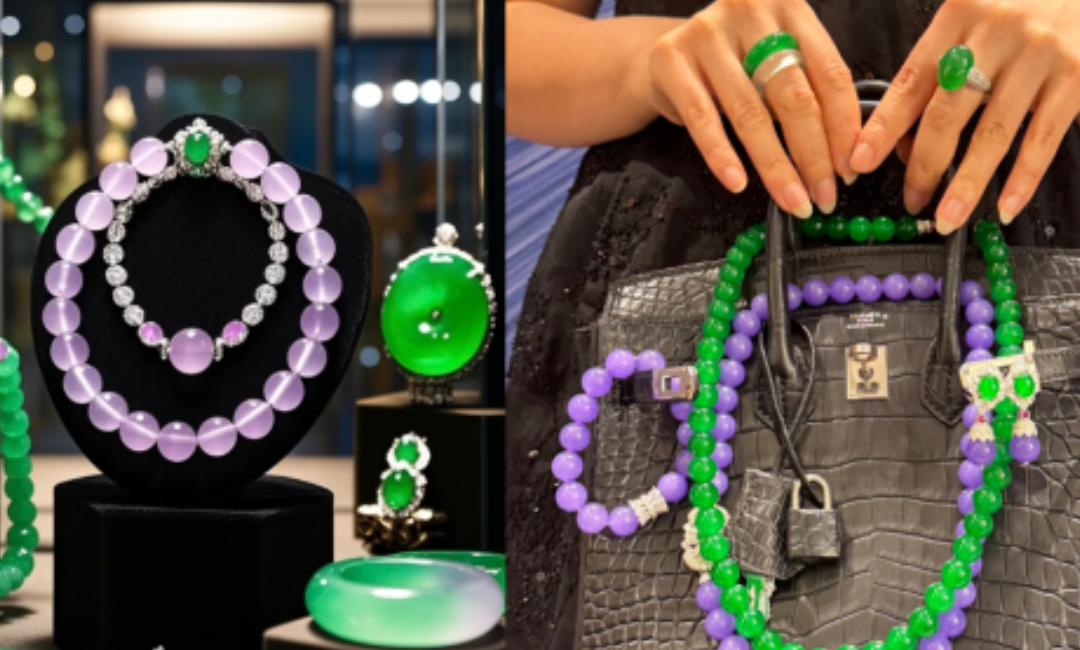
Here you find premium jade—good translucency, vivid color, clean structure, strong light performance and good size. These pieces appear in auctions and serious collections. Bangles, bead necklaces, fine cabochons and uncarved pendants are key categories. They hold value better and offer stronger long-term potential.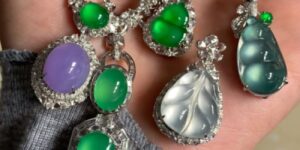
4. Top Tier (Investment Grade Jade, $200,000+)
This is the peak, rare collectible jadeite jewelry. These pieces feature exceptional grain and glow, vivid jadeite color, strong light performance, large size, and minimal flaws. They are extremely rare and function as global hard assets. At this level, price is driven by rarity and market recognition, often seen in major auctions.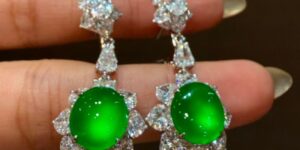
Investment Strategy by Budget
Your strategy should match your budget. The key principle is simple: buy less, but choose the best pieces within your means, focusing on the most recognized categories in the market. For smaller budgets, focus on quality over quantity. One strong piece of fine jade is better than several average ones. For mid-range collectors, balance is important—jadeite bangles offer stability, while cabochon jewelry has strong demand and visual appeal. For higher budgets, focus only on standout pieces that show clear rarity, quality, and presence.
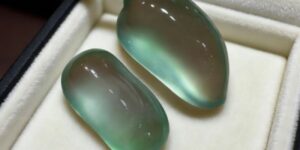
Building a Real Jadeite Portfolio
Successful jadeite collecting requires discipline. Learn how to evaluate color, structure, and light performance. Always buy authentic jade from trusted sources with proper certification. Follow auction results from Sotheby’s, Christie’s, and Poly to understand real pricing. Most importantly, think long term—jadeite rewards patience.
Jadeite is more than an asset. It carries cultural meaning and natural beauty that few materials can match. Each piece of natural jade is formed over hundreds of millions of years under extreme geological conditions, making it truly rare and timeless.
At Hermit Jade, we select premium jadeite and investment grade jade based on real market trends and global auction data. We guide collectors at every level with full transparency in origin, quality, and value.
Because jadeite investment is not just about price—it’s about choosing the right pieces and understanding why it matters.
Jadeite Investment:20 Years of Auction Trends and Price Growth
Jadeite Investment: 20 Years of Auction Trends and Price Growth
Jadeite, especially high quality pieces from Myanmar, has become a global hard asset. Over the past 20 years, international auctions such as Sotheby’s, Christie’s, and Poly Auction have acted as the clearest indicator of its value. By looking at auction data, we can better understand how investment grade jadeite, premium jadeite, and collectible jadeite jewelry have evolved.
Jadeite Investment 20 Years of Auction Trends and Price Growth (1)
Four Phases of the Jadeite Auction Market (2005–2025)
1. Growth Phase (2005–2010)
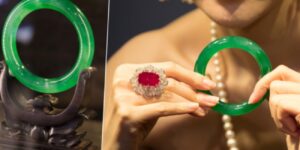
As China’s wealth grew, demand for natural jadeite and luxury jade jewelry increased rapidly. In 2009, a jadeite bangle sold at Christie’s Hong Kong for HKD 15.68 million, setting a new benchmark. Prices for mid- to high-end jadeite rose by 20–40% annually.
2. Boom Phase (2011–2017)
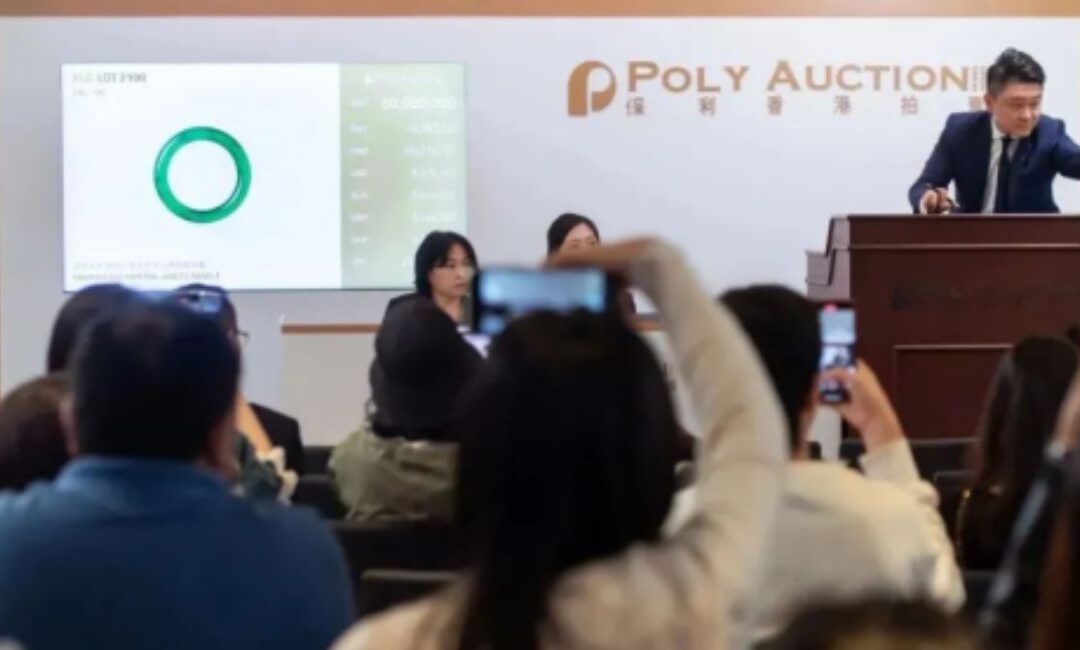
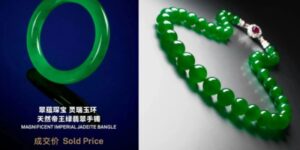
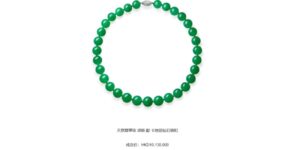
This period saw record-breaking prices. In 2017, the “Hutton-Mdivani Jadeite Necklace” sold for HKD 72.62 million at Sotheby’s. In the same year, a full green jadeite bangle reached over HKD 500 million at Poly Auction. Imperial jade and top-tier pieces became global trophies.
3. Adjustment Phase (2018–2022)
The market became more rational. While top-quality jadeite remained strong, mid- and lower-tier pieces corrected by 20–30%. After COVID, online auctions increased, and buyer behavior became more selective.
Jadeite Investment 20 Years of Auction Trends and Price Growth (5)
4. Divergence Phase (2023–2025)
The market split clearly. Top investment grade jadeite continued to rise, while lower-quality jade stagnated. In 2025, a jadeite bangle sold for RMB 280 million, showing that the best pieces are still in extreme demand.
What Drives Auction Prices?
Auction results reveal clear patterns behind value:
-
Changing Preferences
- 2005–2015: Bangles and beads dominated the market
- 2016–2020: Cabochons (small but perfect pieces) became popular
- 2021–2025: Matching sets and collections gained attention
2. Global Buyers
Early buyers were mainly from Hong Kong and Taiwan. Today, collectors from Mainland China, Southeast Asia, Europe, and the US all participate. Institutional buyers such as family offices are also entering.
3. Key Value Factors
Collectors consistently focus on four elements:
- Texture (structure and transparency) – ~40% importance
- Color – ~40%
- Craftsmanship – ~10%
- Shape and size – ~10%
The highest premiums go to pieces that combine glassy texture, imperial color, large size, and no cracks.
Iconic Auction Examples
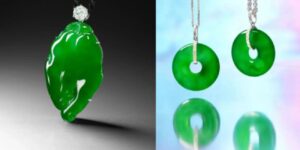
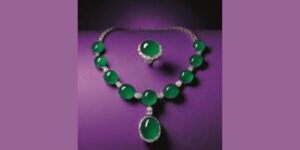
- 2017 – Hutton-Mdivani Necklace (Sotheby’s)
A historic jadeite bead necklace increased over 7 times in value since its earlier sale. - 2019 – Jadeite Cabochon Ring (Christie’s New York)
A top-quality cabochon reached HKD 32 million, showing growing global acceptance of real jadeite jewelry. - 2025 – Full Green Jadeite Bangle (Poly Auction)
Sold for RMB 280 million after intense bidding. Large size and flawless quality made it a strategic asset.
What This Means for Investors
The past 20 years show a clear trend:
- Top investment grade jadecontinues to rise
- Mid-level fine jadeitegrows steadily
- Low-end jade has little investment value
At Hermit Jade, we closely follow global auction results and market trends. Our experts continuously study price movements, collector behavior, and supply changes to guide our clients. We help collectors select collectible jade jewelry that align with long-term asset strategies.
Jadeite Certification: Buy Jadeite with Confidence
Jadeite Certification: Buy Jadeite with Confidence
When buying jadeite jewelry, many buyers rely on certificates because a laboratory report is the proof of authenticity. In this blog, we explain about jadeite certificates for readers to better understand details and avoid common traps in the jadeite market.
What a Jadeite Certificate Confirms
Standard jadeite certificates focus on one key point: confirming that the material is natural jadeite (Type A / Grade A). This means the jadeite has not been chemically treated, dyed, or polymer-injected.
Certificates may also include basic details such as color, transparency, shape, and size. However, these descriptions are usually general and should not be used to judge the quality or value of the jadeite.
Authoritative Jadeite Certification Labs
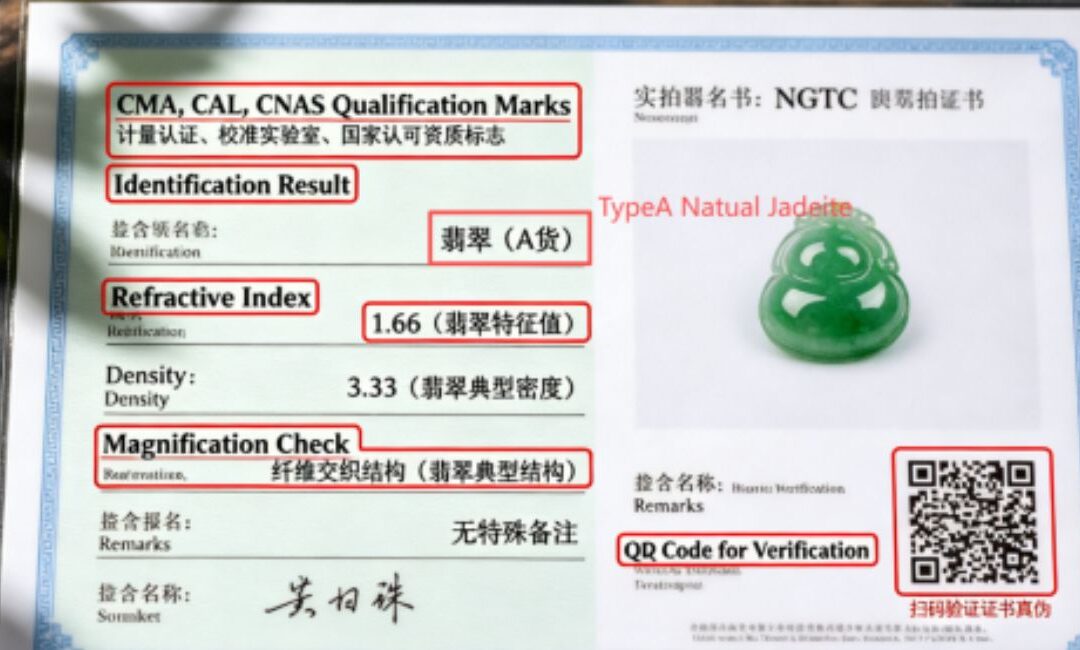
In China, gemstone testing follows national standards GB/T 16552 and GB/T 16553. An authoritative certificate must include three accreditation marks:
- CMA(China Metrology Accreditation)
- CAL(Approval for Testing Laboratory)
- CNAS(China National Accreditation Service for Conformity Assessment)
Major trusted institutions include:
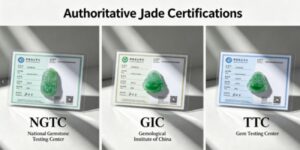
- NGTC (National Gemstone Testing Center)
Directly under the Ministry of Natural Resources. The highest authority in China and the most widely recognized globally. - GIC (Gemological Institute of China, China University of Geosciences)
University-backed institution with strict academic standards and strong market credibility. - GTC (Provincial Gem Testing Centers)
Reliable regional authorities offering a balance of professionalism and accessibility.
International labs (GIA, IGI)
Commonly used for cross-border collections and high-end jewelry.
Jadeite Certification Buy Jadeite with Confidence (1)
How to Read a Jadeite Certificate
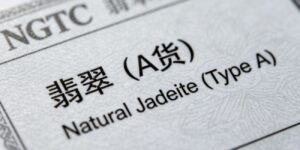
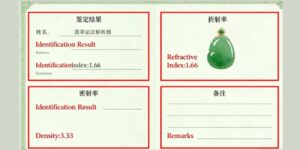
Experienced buyers usually go straight to the most important section: “Identification Result.” As long as it states Type A jadeite, Grade A, or Natural jadeite (A), it confirms the piece is genuine jadeite with no chemical treatment. This is what you should always look for first. Type B/C/B+C are all with chemical treatment and have no value.
Jadeite Certification Buy Jadeite with Confidence (2)
Apart from the identification result, certificates also list a few physical properties:
- Refractive Index (~1.66)
A typical optical property of jadeite. Most imitations cannot match this. - Density (~3.33)
Genuine jadeite feels dense and “heavy in hand,” unlike glass or other imitations. - Microscopic Structure
Natural jadeite shows a fine, interlocking fibrous crystal structure under magnification.
Jadeite Certification Buy Jadeite with Confidence (3)
Steps to Verify a Certificate
To avoid fake or “borrowed” certificates, buyers can verify online as per below steps:
- Scan QR code or enter certificate number on the official website to confirm consistency.
- Check the accreditation marks, they must include CMA and CNAS.
- Check the stamp and signature, it must include clear official stamps or traceable digital signatures.
- Verify weight consistency, the recorded weight should match the actual stone within 0.01g.
Review the testing logic, be cautious if key scientific data (e.g., spectroscopy or standard gem testing indicators) are missing or vague.