
High quality natural jadeite jade Within Your Budget
High quality natural jadeite jade Within Your Budget
High quality natural jadeite jade is increasingly seen as hard assets. From luxury jadeite jewelry to investment grade jadeite, more collectors are adding jadeite to their long-term portfolios.
But not all jadeite plays the same role in investment—and not every collector needs a top-tier budget. To build a smart collection, you need to understand how the market is structured, then choose the best pieces within your own budget and personal taste.
The Jadeite Investment Pyramid
A simple way to understand the market is through four levels:
-
Entry Level (Consumer Grade, $100~$10,000)
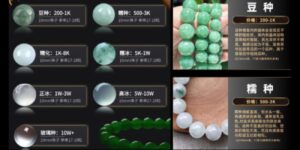
These pieces are widely available, often with darker tones, visible inclusions, and lower transparency. They are suitable for daily wear but have limited investment value. This level also carries higher risk of treated or imitation jadeite.
2. Commercial Level (Accessible Investment, $10,000–$20,000)
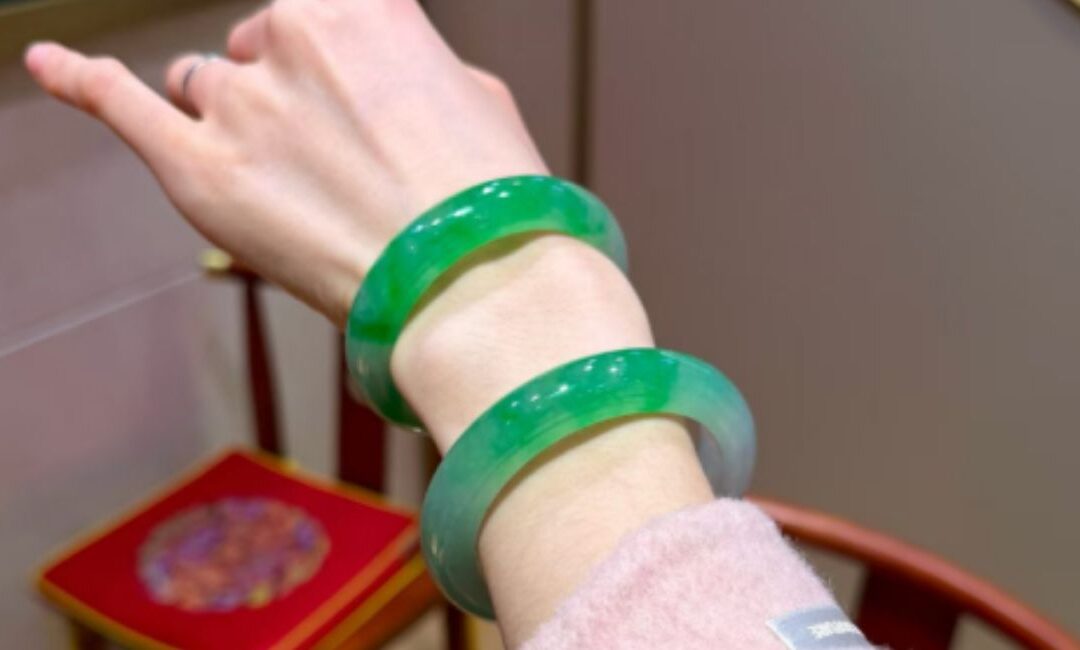
This category includes better-quality jadeite with brighter color and improved transparency. Common items include pendants, cabochon rings, and bangles with certified jadeite jewelry reports (NGTC, GIA). These pieces are more liquid and may show steady, moderate value growth. For many, this is the ideal starting point.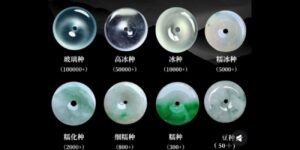
3. Collector Level (High-Quality Jade, ~$20,000–$200,000)
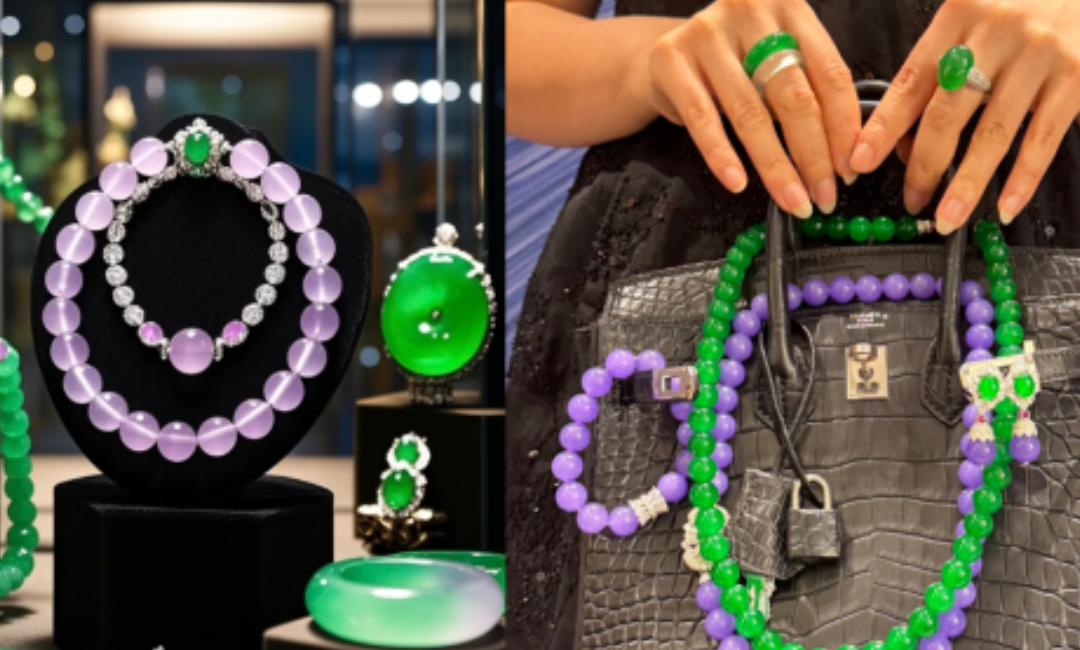
Here you find premium jade—good translucency, vivid color, clean structure, strong light performance and good size. These pieces appear in auctions and serious collections. Bangles, bead necklaces, fine cabochons and uncarved pendants are key categories. They hold value better and offer stronger long-term potential.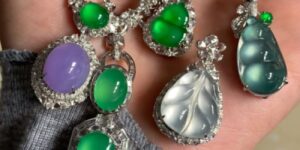
4. Top Tier (Investment Grade Jade, $200,000+)
This is the peak, rare collectible jadeite jewelry. These pieces feature exceptional grain and glow, vivid jadeite color, strong light performance, large size, and minimal flaws. They are extremely rare and function as global hard assets. At this level, price is driven by rarity and market recognition, often seen in major auctions.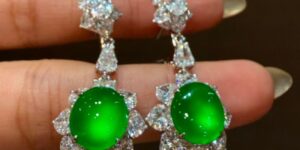
Investment Strategy by Budget
Your strategy should match your budget. The key principle is simple: buy less, but choose the best pieces within your means, focusing on the most recognized categories in the market. For smaller budgets, focus on quality over quantity. One strong piece of fine jade is better than several average ones. For mid-range collectors, balance is important—jadeite bangles offer stability, while cabochon jewelry has strong demand and visual appeal. For higher budgets, focus only on standout pieces that show clear rarity, quality, and presence.
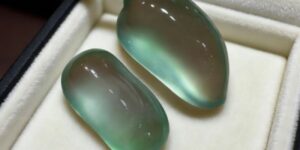
Building a Real Jadeite Portfolio
Successful jadeite collecting requires discipline. Learn how to evaluate color, structure, and light performance. Always buy authentic jade from trusted sources with proper certification. Follow auction results from Sotheby’s, Christie’s, and Poly to understand real pricing. Most importantly, think long term—jadeite rewards patience.
Jadeite is more than an asset. It carries cultural meaning and natural beauty that few materials can match. Each piece of natural jade is formed over hundreds of millions of years under extreme geological conditions, making it truly rare and timeless.
At Hermit Jade, we select premium jadeite and investment grade jade based on real market trends and global auction data. We guide collectors at every level with full transparency in origin, quality, and value.
Because jadeite investment is not just about price—it’s about choosing the right pieces and understanding why it matters.
Jadeite Certification: Buy Jadeite with Confidence
Jadeite Certification: Buy Jadeite with Confidence
When buying jadeite jewelry, many buyers rely on certificates because a laboratory report is the proof of authenticity. In this blog, we explain about jadeite certificates for readers to better understand details and avoid common traps in the jadeite market.
What a Jadeite Certificate Confirms
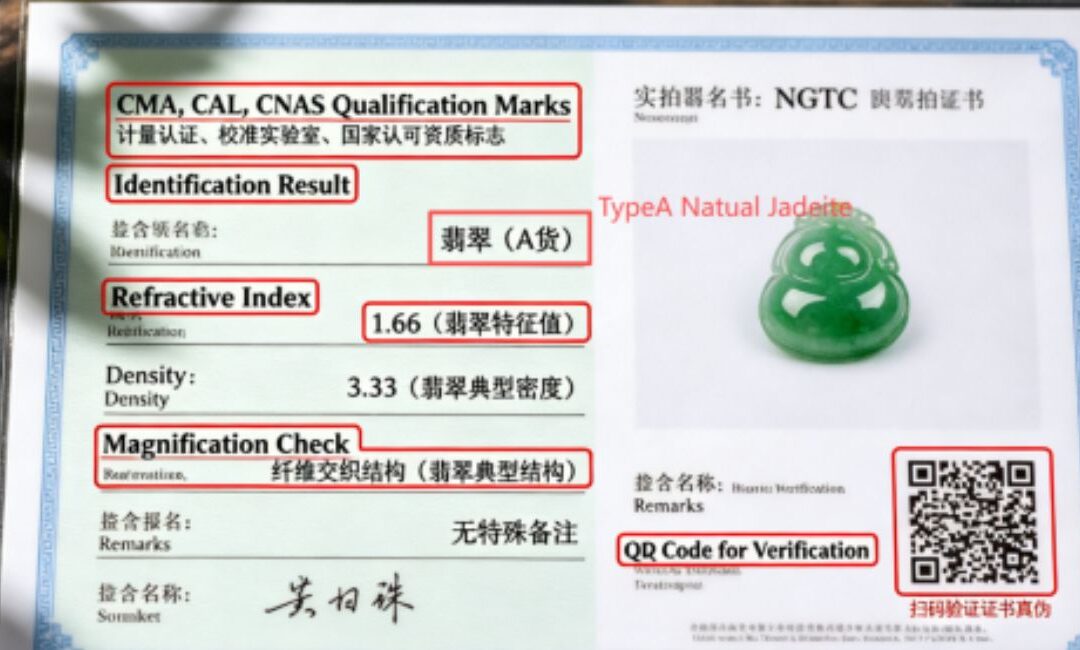
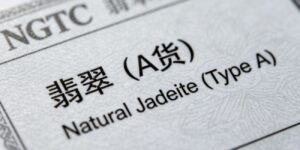
Standard jadeite certificates focus on one key point: confirming that the material is natural jadeite (Type A / Grade A). This means the jadeite has not been chemically treated, dyed, or polymer-injected.
Certificates may also include basic details such as color, transparency, shape, and size. However, these descriptions are usually general and should not be used to judge the quality or value of the jadeite.
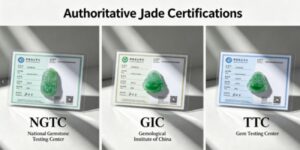
Authoritative Jadeite Certification Labs
In China, gemstone testing follows national standards GB/T 16552 and GB/T 16553. An authoritative certificate must include three accreditation marks:
- CMA(China Metrology Accreditation)
- CAL(Approval for Testing Laboratory)
- CNAS(China National Accreditation Service for Conformity Assessment)
Major trusted institutions include:
- NGTC (National Gemstone Testing Center)
Directly under the Ministry of Natural Resources. The highest authority in China and the most widely recognized globally. - GIC (Gemological Institute of China, China University of Geosciences)
University-backed institution with strict academic standards and strong market credibility. - GTC (Provincial Gem Testing Centers)
Reliable regional authorities offering a balance of professionalism and accessibility.
International labs (GIA, IGI)
Commonly used for cross-border collections and high-end jewelry.
Jadeite Certification Buy Jadeite with Confidence (1)
How to Read a Jadeite Certificate
Experienced buyers usually go straight to the most important section: “Identification Result.” As long as it states Type A jadeite, Grade A, or Natural jadeite (A), it confirms the piece is genuine jadeite with no chemical treatment. This is what you should always look for first. Type B/C/B+C are all with chemical treatment and have no value.
Jadeite Certification Buy Jadeite with Confidence (2)
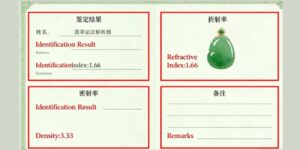
Apart from the identification result, certificates also list a few physical properties:
- Refractive Index (~1.66)
A typical optical property of jadeite. Most imitations cannot match this. - Density (~3.33)
Genuine jadeite feels dense and “heavy in hand,” unlike glass or other imitations. - Microscopic Structure
Natural jadeite shows a fine, interlocking fibrous crystal structure under magnification.
Jadeite Certification Buy Jadeite with Confidence (3)
Steps to Verify a Certificate
To avoid fake or “borrowed” certificates, buyers can verify online as per below steps:
- Scan QR code or enter certificate number on the official website to confirm consistency.
- Check the accreditation marks, they must include CMA and CNAS.
- Check the stamp and signature, it must include clear official stamps or traceable digital signatures.
- Verify weight consistency, the recorded weight should match the actual stone within 0.01g.
Review the testing logic, be cautious if key scientific data (e.g., spectroscopy or standard gem testing indicators) are missing or vague.
How to Tell Burmese Jade vs Guatemala Jade
How to Tell Burmese Jade vs Guatemala Jade
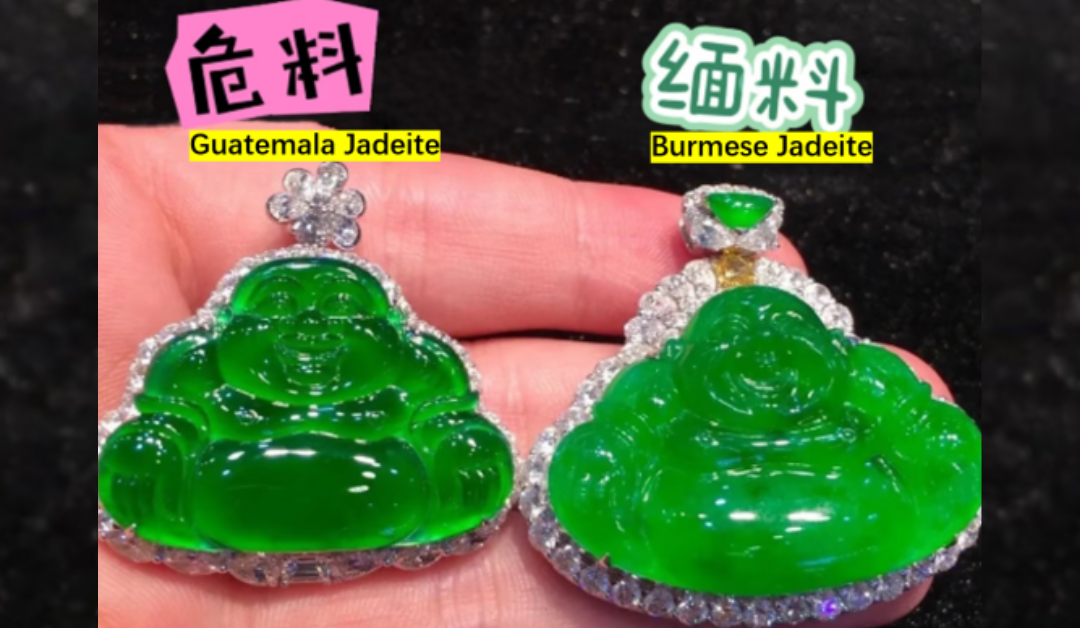
When it comes to premium jadeite, understanding the difference between Burmese jade vs Guatemala jade is essential for collectors, investors, and jewelry buyers. The origin of jadeite significantly affects its value, rarity, and overall appearance. While both types can look similar at first glance, there are key differences that help distinguish them.
Burmese Jade vs Guatemala Jade: Color Tone Differences
Warm vs Cool Undertones in Burmese Jade vs Guatemala Jade
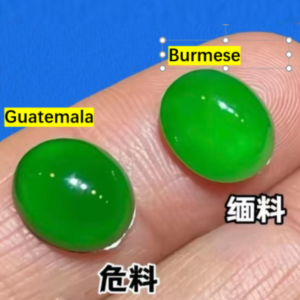
One of the most important indicators in identifying Burmese jade vs Guatemala jade is the color tone. Burmese jadeite typically shows a warm, vibrant glow, even in deep green shades like imperial green. In contrast, Guatemala jadeite often appears cooler, with bluish or grayish undertones.
How to Observe Color in Burmese Jade vs Guatemala Jade
Under natural daylight, Burmese jade looks brighter and more lively, while Guatemala jade may appear darker and less saturated—especially when viewed from different angles. Rotating the stone helps reveal how stable the color remains.
Burmese Jade vs Guatemala Jade
Burmese Jade vs Guatemala Jade: Light Performance
Living Light vs Surface Reflection in Burmese Jade vs Guatemala Jade
Another key difference in Burmese jade vs Guatemala jade is how light interacts with the stone. Burmese jadeite is known for its “living light,” where light enters and diffuses within the stone, creating a soft, moving glow.
Guatemala jadeite reflects more light from the surface, making it appear flatter and less dynamic.
How to Test Light Performance
Hold the jade near a natural light source and rotate it slowly. Burmese jade will show internal movement of light, while Guatemala jade will reflect light more statically.
Living Light vs Surface Reflection in Burmese Jade vs Guatemala Jade
Burmese Jade vs Guatemala Jade: Thickness and Structure
Thickness Impact on Burmese Jade vs Guatemala Jade
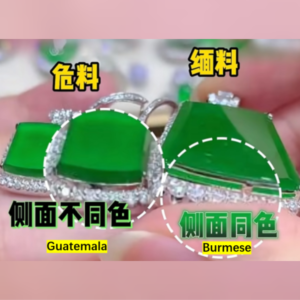
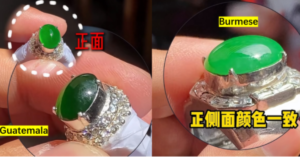
Burmese jadeite maintains its beauty even when cut thicker. Its color remains stable, and the stone continues to glow from within. Guatemala jadeite is more sensitive to thickness and is o
Burmese Jade vs Guatemala Jade Thickness and Structure
ften cut thinner to enhance its appearance.
Crystal Structure Differences in Burmese Jade vs Guatemala Jade
Burmese jade has a fine, compact crystal structure, giving it a smooth appearance. Guatemala jade tends to have a slightly grainy or coarser texture, sometimes visible under magnification.
Burmese Jade vs Guatemala Jade Clarity and Inclusions
Burmese Jade vs Guatemala Jade: Clarity and Inclusions
Inclusion Patterns in Burmese Jade vs Guatemala Jade
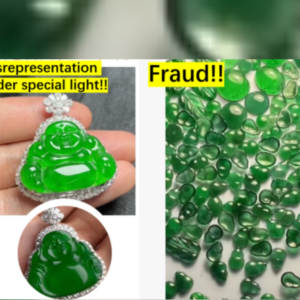
In Burmese jade vs Guatemala jade, inclusions appear differently. Burmese jadeite often shows soft, mist-like inclusions that blend naturally into the stone.
Guatemala jadeite may have more noticeable inclusions, such as darker spots or clustered patterns.
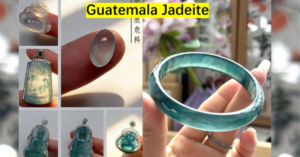
Burmese Jade vs Guatemala Jade Color Distribution
Burmese Jade vs Guatemala Jade: Color Distribution
Blended vs Segmented Color in Burmese Jade vs Guatemala Jade
Color distribution is another distinguishing factor in Burmese jade vs Guatemala jade. Burmese jade typically has smooth and natural color transitions.
Guatemala jade often shows more segmented or patchy color areas, with visible boundaries between colors.
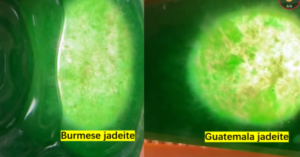
How to Tell Burmese Jade vs Guatemala Jade (7)
Final Thoughts on Burmese Jade vs Guatemala Jade
Understanding the differences between Burmese jade vs Guatemala jade helps buyers make informed decisions, especially when investing in high-quality jadeite jewelry. By observing color tone, light performance, structure, clarity, and color distribution, you can more confidently identify the origin and value of your jade.